
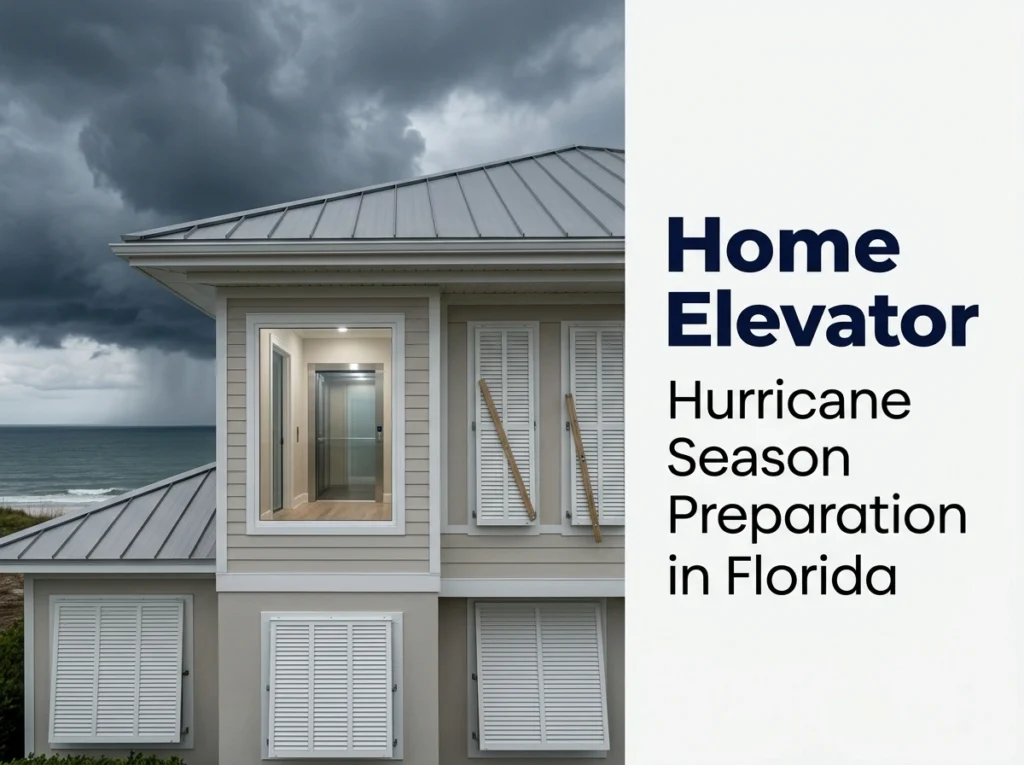
Florida’s hurricane season runs from June 1 through November 30. For homeowners along the Gulf Coast, that six-month window demands more than boarding up windows. If your home has a residential elevator, the storm adds mechanical and electrical risk that most people overlook until it’s too late.
A flooded elevator pit, a cab stuck between floors during a power outage, or corroded components discovered after a storm are not rare outcomes. They are routine post-storm calls along the Emerald Coast from Panama City Beach to Destin.
This guide covers what you need to do before, during, and after a hurricane to protect your elevator, keep your household safe, and avoid costly repairs.
By the end of this article, you’ll understand:
- What pre-season inspections actually cover and why they matter
- The correct shutdown protocol before a storm hits
- How battery backup and emergency lowering systems work under power loss
- Which parts of your elevator carry the highest flood risk
- What post-storm inspection involves before you restart the system
What Does a Pre-Season Home Elevator Inspection Actually Cover?
A proper pre-hurricane inspection is not a visual walk-around. A certified elevator technician evaluates every system that could be compromised by wind, rain, moisture, or power disruption before Florida hurricane season begins.
The table below shows what a full inspection covers and what failure in each area actually means:
| Inspection Area | What Gets Checked | Risk If Skipped |
| Elevator Pit | Sump pump, float switches, water intrusion alarms | Flooding destroys electrical components |
| Machine Room / Control Panel | Seal integrity, moisture gaps, vent covers | Water reaches motor and controller |
| Emergency Lowering System | Battery charge, manual release function | Passengers stranded during power outage |
| Battery Backup | Charge level, connection health | No emergency descent capability |
| Corrosion Check | Metal tracks, cab hardware, shaft walls | Accelerated wear from salt air |
| Shaft Vents and Seals | Gaps facing storm winds | Wind-driven rain saturates wiring |
This home elevator hurricane preparation Florida checklist is what separates homeowners who sail through storm season from the ones calling for emergency service in October.
Annual maintenance contracts typically include this review as a scheduled spring visit. For homeowners without a plan, booking a dedicated hurricane readiness inspection in April or May gives enough lead time to address repairs before the first storm. If you’re in Panama City Beach or along 30A, reach out to Coastline Lift to schedule your inspection now.
What Is the Correct Shutdown Protocol Before a Hurricane?
Yes, you should shut down your home elevator before a major storm makes landfall. Hurricane elevator safety Florida protocols recommend this consistently.
An elevator left powered during a hurricane faces three simultaneous risks:
- Power surges from lightning or utility fluctuations that damage the control board
- Water infiltration that activates electrical components unexpectedly
- Entrapment if a power outage occurs with someone inside mid-ride
Follow this shutdown sequence before every major storm:
Step 1: Park at the highest landing. Bring the cab to the top floor. This places it as far from potential pit flooding and storm surge as possible.
Step 2: Engage the run/stop switch. This cuts power to cab movement circuits while keeping passive safety systems active. The switch is typically in the cab or at a landing call station.
Step 3: Place battery backup in standby. Confirm the battery backup system is charged, then switch it to standby per your manufacturer’s instructions. You want it ready for post-storm use, not draining during the event.
Step 4: For outdoor or beach house elevators, cover exposed components. Any exterior cab panels, entry hardware, or mechanical housings exposed to direct wind should be covered or sealed before you leave the property.
Pneumatic vacuum elevators have an additional built-in feature worth knowing: some PVE models include a homing or flood switch that automatically parks the cab at a preset level during extended power loss. If your elevator has this feature, confirm it is active before the storm arrives.
If you are evacuating ahead of a mandatory evacuation order, complete this shutdown before you go.
What Parts of a Home Elevator Are Most at Risk from Flooding?
Flooding is the single largest threat to residential elevators during a Florida hurricane. The risk is not spread evenly across the system. It concentrates in specific areas, and knowing them helps you prioritize protection.
| Component | Location | Flood Risk Level | Primary Threat |
| Elevator Pit | Base of hoistway | Very High | Storm surge, groundwater, sump failure |
| Electrical Junction Boxes | Pit and shaft walls | Very High | Short circuit, corrosion |
| Machine Room / Controller | Ground level or below | High | Inundation, voltage damage |
| Motor Assembly (PVE) | Top of tube | Low | Wind-driven moisture at seams |
| Metal Tracks and Rails | Full shaft height | Medium | Salt air corrosion after storm |
| Cab Interior | Varies by landing | Low | Only if hoistway seals fail |
Home elevator flooding protection starts with the sump pump, but a single pump is not enough for storm conditions. A properly prepared pit should have:
- A primary electric sump pump with a reliable drain path
- A secondary battery-backed sump pump that activates when the primary fails or loses power
- Water sensors with audible or remote alerts that notify you when pit levels rise
Home elevator water damage from wind-driven rain is a separate risk that homeowners underestimate. Rain can penetrate through vent gaps, door seals, or unsealed shaft penetrations without the home flooding at all. It saturates wiring and motor components quietly. Sealing shaft vents before a storm is a simple step that prevents a disproportionate amount of post-storm damage.
For beach house and coastal elevators along the Emerald Coast, salt air carried inland by hurricane winds deposits on every metal surface in the system. Corrosion-resistant materials and protective coatings applied during annual maintenance are not optional in this environment. It is the difference between a system that lasts 20 years and one that degrades in five.
What Should You Do Immediately After a Hurricane Passes?
Do not restart your residential elevator before a post-storm inspection. This single rule prevents the majority of post-storm repair costs.
The home elevator post-storm inspection process exists because storm damage is frequently invisible from outside. A pit that looks dry may have held standing water for 24 hours. A control panel that looks intact may have absorbed a voltage surge. A pneumatic tube that appears undisturbed may have a shifted base connection.
Here is the correct post-storm sequence:
1. Visual check first, operation last. Look at the pit drain area for water lines on the walls. Check the control panel housing for condensation or moisture. Look through the hoistway for debris or physical displacement. Do not power the elevator on based on this check alone.
2. Call for a certified inspection before operating. A technician will test electrical systems before restoring power, inspect the pit for residual moisture, check the hoistway for displacement, and verify all safety systems including obstruction sensors, emergency lighting, and the emergency lowering mechanism.
3. Get ahead of the post-storm backlog. Residential elevator emergency repair calls spike in the weeks following a major storm in Florida. Scheduling your inspection within 48 to 72 hours of the storm clearing puts you ahead of the queue and gets your elevator back in service faster.
For homeowners with a maintenance plan through Coastline Lift, the post-storm inspection is part of your service agreement. For those without a plan, this is also a practical time to set one up.
Why Coastline Lift Is the Right Partner for Home Elevator Hurricane Service
Coastal elevator service is not the same as general elevator service. Coastline Lift was built specifically for residential elevator ownership in Florida’s coastal communities.
Locally owned and operated in Panama City Beach. When you call after a storm, you reach the same team that installed your elevator. No national call centers. No subcontractors. The technicians responding to your post-storm call are the same certified professionals who handle installations and scheduled maintenance.
ASME A18.1 certified on every installation. Emergency lowering systems, obstruction sensors, and battery backup are standard on every project. The safety infrastructure you need before, during, and after a hurricane is already built into your system.
Authorized dealer for PVE, Savaria, and Level Up. Whether you own a PVE 30, a Savaria VueLift, or a Level Up Whisper, the technicians servicing your system know it completely. These are three of the most respected elevator manufacturers in North America.
24/7 emergency elevator service. Storm damage doesn’t follow business hours. Coastline Lift provides around-the-clock emergency response for clients across Panama City Beach, Destin, 30A, Santa Rosa Beach, Mexico Beach, and the Emerald Coast.
Maintenance plans built for Gulf Coast conditions. Salt air, humidity, and seasonal storm exposure accelerate wear in ways that national maintenance templates don’t account for. Coastline Lift’s plans are written for this specific environment.
200-plus residential elevator installations. 10-plus years of local Panhandle experience. A 5.0-star rated service record. One in-house team from first call to final ride.
Frequently Asked Questions
What should I do to prepare my home elevator before a hurricane hits in Florida?
Schedule a pre-season inspection in April or May with a certified elevator technician. The inspection should cover the sump pump, float switches, water intrusion alarms, battery backup, and emergency lowering system. Address any identified repairs before the first storm of the season.
Where should I park my elevator cab before a Florida storm?
Park the cab at the highest landing in your home, then engage the run/stop switch. If your elevator has a homing or flood switch feature, confirm it is active before you leave the property or power down.
Can flooding damage a home elevator and which parts are most at risk?
Yes. The elevator pit and electrical junction boxes carry the highest risk. Water reaching these components causes short circuits and corrosion that often appear days after the storm. A battery-backed secondary sump pump and water sensors are the most effective protective measures.
When is it safe to use my home elevator again after a hurricane passes?
Not until a certified technician completes a post-storm inspection. Even if the elevator looks undamaged and power has been restored, operating before inspection risks powering through hidden water damage or electrical faults.
How do I find emergency home elevator repair service in the Florida Panhandle after a storm?
Contact a local service with direct-response capacity and no subcontractors. Coastline Lift provides 24/7 home elevator emergency service Florida to clients across the Emerald Coast. Call (850) 558-5331 or email sales@coastlinelift.com.
Protect Your Elevator Before the Season Starts
Hurricane season is predictable. The damage it causes doesn’t have to be. Prepare your elevator before June, shut it down correctly before the storm, and have it inspected before you restart it. Those three steps protect your system, your warranty, and your family.
Call Coastline Lift at (850) 558-5331 or visit coastlinelift.com to book your hurricane readiness inspection today. Serving Panama City Beach, Destin, 30A, Santa Rosa Beach, Mexico Beach, and the entire Emerald Coast.
